Orthodontics in Business Bay, Dubai
There’s no single best way to straighten teeth, there’s the best way for your teeth, your budget, and how visible you’re willing to let the treatment be. We offer four proven systems, and every one of them starts with the same step: a 3D digital scan of your teeth, so we can plan the movement precisely and show you where your smile is heading before anything goes on your teeth.
Invisalign Clear Aligners
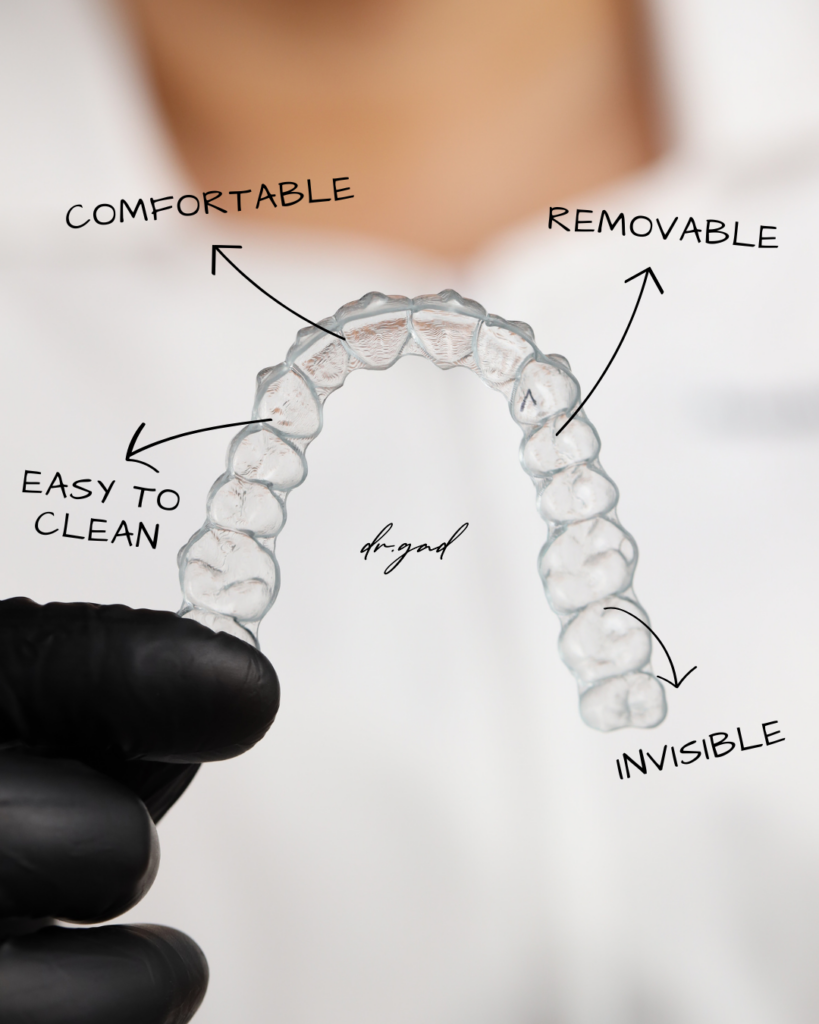
Clear aligners are the discreet option: a series of custom-made, nearly invisible plastic trays that move your teeth in small, planned steps, roughly a quarter of a millimetre per aligner. You wear each set for one to two weeks, then switch to the next.
Why Dubai professionals pick them: they’re removable. You take them out to eat, so no food restrictions; you take them out to brush, so oral hygiene stays easy. Check-ups run every six to eight weeks, fewer visits than fixed braces need, and most cases finish in 12–18 months.
The honest trade-off: aligners only work if they’re in your mouth around 22 hours a day. If you know you’ll forget them in a drawer, fixed braces will get you a better result.
Modern Metal Braces
Today’s metal braces are smaller, more comfortable, and considerably more efficient than the ones you remember from school. We place each bracket using computer-aided planning, which shortens treatment time, and the low-friction archwires apply steadier, gentler force than older systems.
Metal remains the workhorse: it handles the widest range of cases, including complex bite corrections aligners can struggle with, and it’s the most economical option. If you want a little personality, the elastic ties come in colours; if you don’t, they come in neutral.
The Damon System
Damon braces are self-ligating: instead of elastic ties holding the wire, each bracket has a small slide mechanism. Less friction means teeth can move under lighter, more continuous force, which for many patients translates to fewer adjustment appointments, shorter chair time per visit, and in suitable cases a treatment several months faster than conventional braces.
If your priority is efficiency and you’re comparing against standard metal braces, ask us whether your case is one where Damon genuinely makes a difference, for some it does, for some the outcome is the same either way, and we’ll tell you which.
Ceramic Braces
Ceramic braces work like metal braces but the brackets are made from translucent, stain-resistant material that blends with your tooth colour, paired with tooth-coloured or clear wires. From a conversation’s distance they’re hard to spot.
They suit adults who need the control of fixed braces but not the look of metal. Treatment typically runs 18–24 months with adjustments every six to eight weeks, marginally longer than metal for some cases, and the brackets need slightly gentler treatment, which we’ll walk you through.
How teeth actually move
Braces and aligners don’t push teeth through bone, they trigger your bone to remodel itself. Gentle, sustained pressure on a tooth compresses the ligament on one side and stretches it on the other; your body responds by dissolving a little bone where there’s pressure and building new bone where there’s space. That’s why orthodontics takes months, not weeks, and why the pacing between aligner changes or adjustment visits matters: rushing force doesn’t move teeth faster, it just makes them sore and the result less stable.
Which system fits you?
- Discretion above all, disciplined wearer → Invisalign
- Complex case or best value → modern metal braces
- Fewer visits, potentially faster → ask about Damon
- Fixed-brace control without the metal look → ceramic
- Not sure → the 3D scan at your consultation usually settles it, and we’ll show you the projected result with each option
Frequently asked questions
Am I too old for braces?
No. Teeth move at any age, a large share of our orthodontic patients are working adults. The biology is the same; only the timeline can differ slightly.
Does it hurt?
Expect pressure and tenderness for a few days after each new aligner or adjustment, manageable with ordinary painkillers, not ongoing pain.
How long will my treatment take?
Most Invisalign cases: 12–18 months. Fixed braces: commonly 18–24 months, sometimes faster with Damon. You’ll get a case-specific estimate at your consultation, from your actual scan, not a brochure figure.
Will I need a retainer afterwards?
Yes, everyone does. Teeth drift back without one. We include retainer planning in every treatment, because a result that doesn’t last isn’t a result.
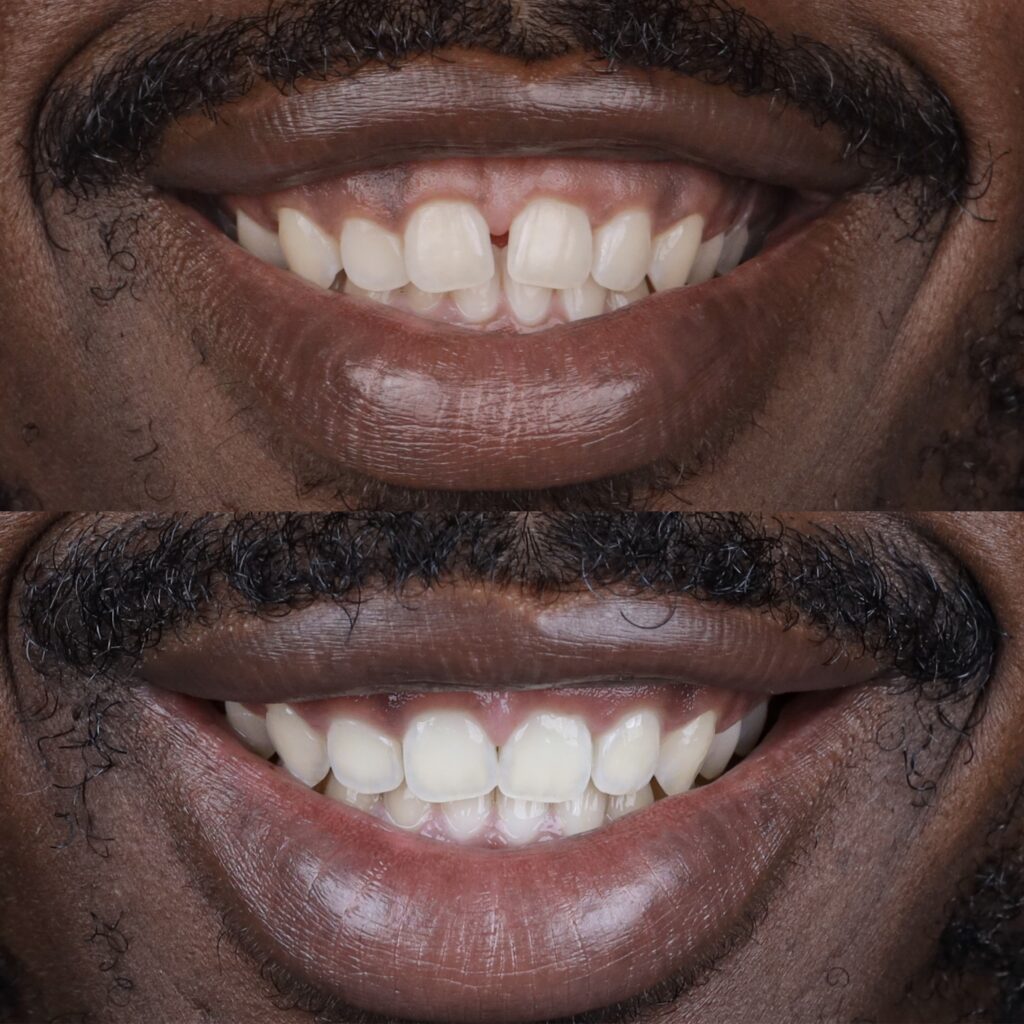
Curious what your smile could look like straightened? The 3D scan at your first visit shows you.